
TL;DR
The Wolf Pack typically dry camps and the combination of the 12v compressor fridge and the 2 flooded lead acid resulted in the inability to use the fridge at all. Dad’s solution is to upgrade to a lithium battery that has enough capacity to run the fridge over night and to rely on the generator or solar panels to top the batteries enough for the next night. The dealership would charge exorbitantly to retrofit a propane fridge or upgrade the electrical system to lithium and so Dad will do it himself, here is his methodology and results.
Background
Right after the first dry run of the TT, Dad immediately knew there is a problem. It was Nov 2023 and the temperature was suppose to be 24F that night. He ran the refer heaters and the fridge to ensure fully test they were functional and within the first night Dad was woken up to the CO detector low battery alarm, the batteries were dead. The next day, the TT’s batteries were put on a battery charger and the test was redone overnight. Unfortunately, same results with the battery dying even earlier.
That’s when either the batteries that came with the TT were bad or they were undersized for the power use overnight. Dad sent the TT back to the dealer to have them check the issue. Their response was user error, you don’t use the refer heaters that way, turn them on as you are ready to dump the tanks. Dad accepted the error thinking the Wolf Pack never camps in the winter and so the refer heaters should be removed from the equation.
The next camping season came and marks the first real camping trip for the TT. Unfortunately, only having the fridge set to cool, the batteries (at least according to the GoPower solar controller) still wouldn’t make the night. The Wolf Pack luckily went with friends and Mom moved all the frozen perishables to their propane refrigerator. The refer heaters weren’t the issue. Now to begin diagnostics.
Troubleshooting
The first issue is whether the fridge is working properly or not. Dad wanted to test if the fridge can keep food at a safe temperature while ensuring it is turning on and off appropriately. This was done on shore power and a hall effect amp meter.
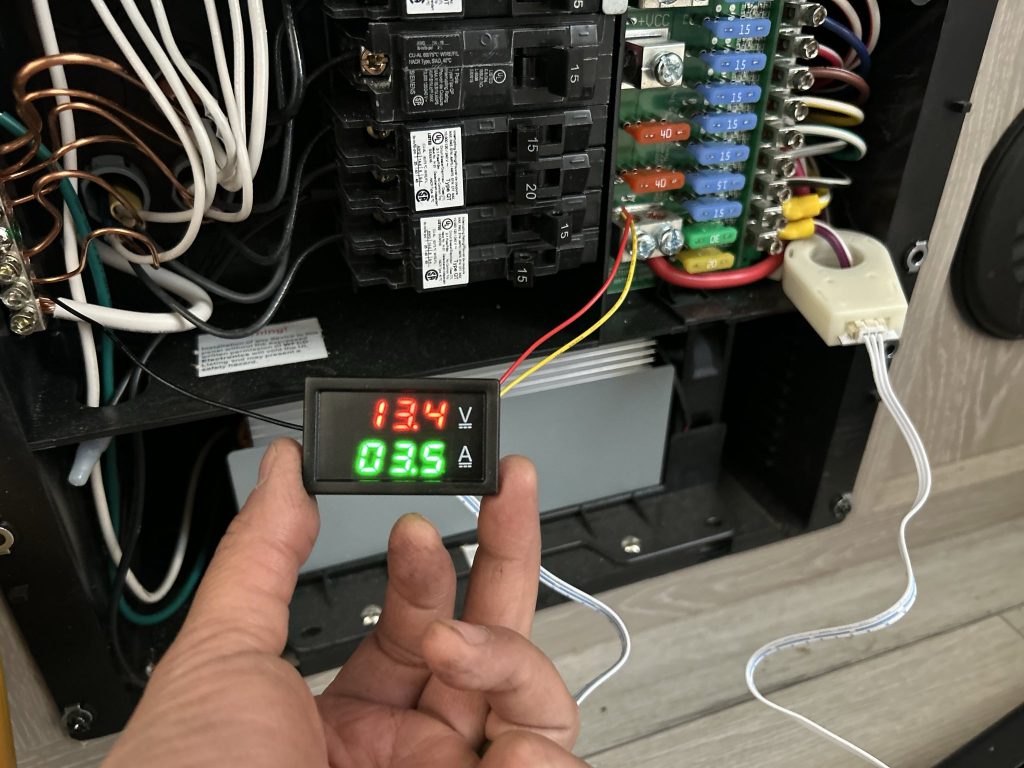
Dad used the running amperage to just guessgineer a battery capacity requirement
6.3A * 36hr = 226.8Ahr battery
And thus, Dad began solutioning
Pilot testing
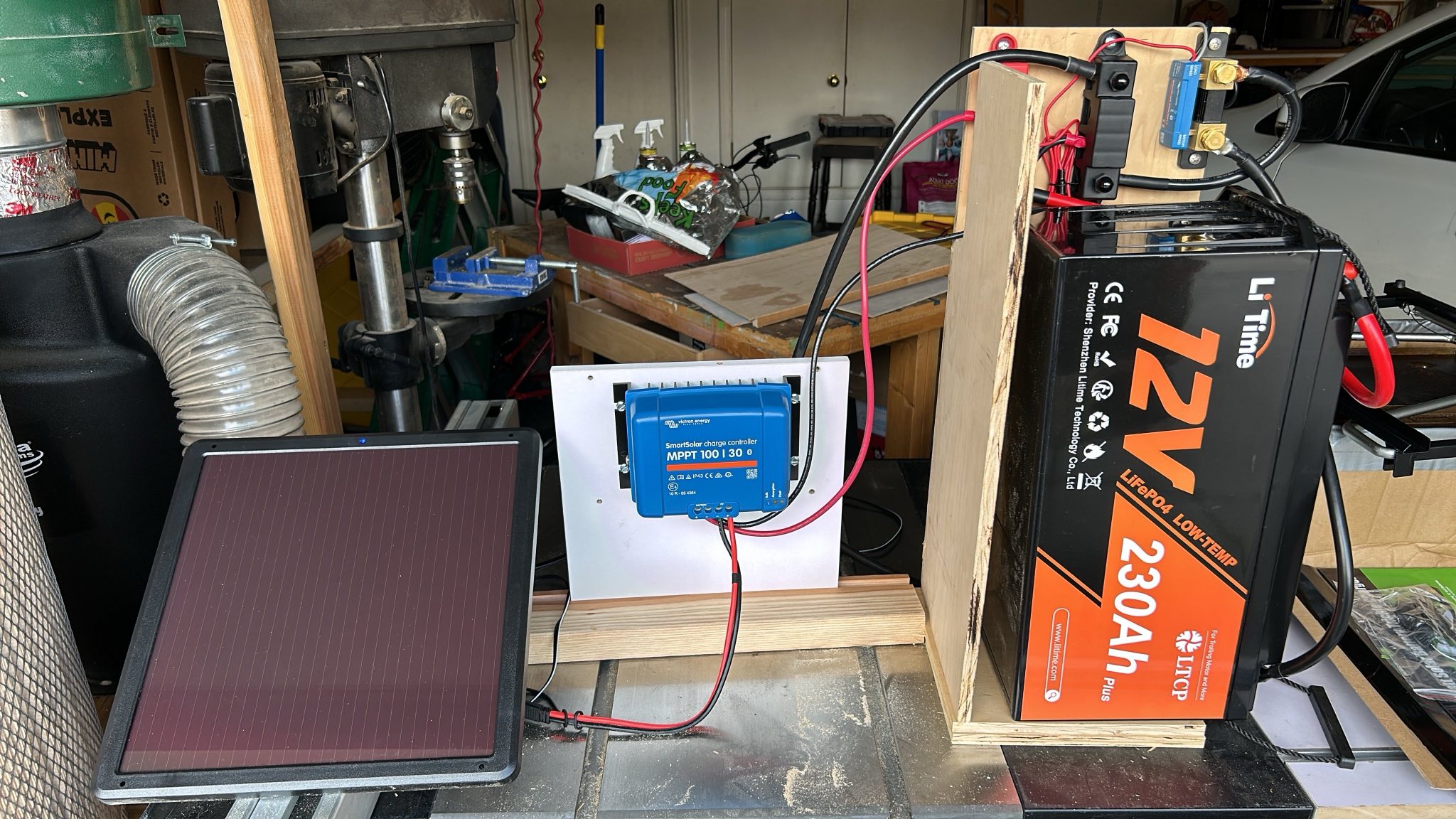
Victron Energy is a mainstream “DIY” (not sure this applies to RV’ers en mass) electrical solution used in industry, residential, marine, and recreational vehicles. Dad is only implementing the pieces to bridge the transition from flooded lead acid to LiFePO4 and so he purchased a SmartSolar MPPT and a SmartShunt.
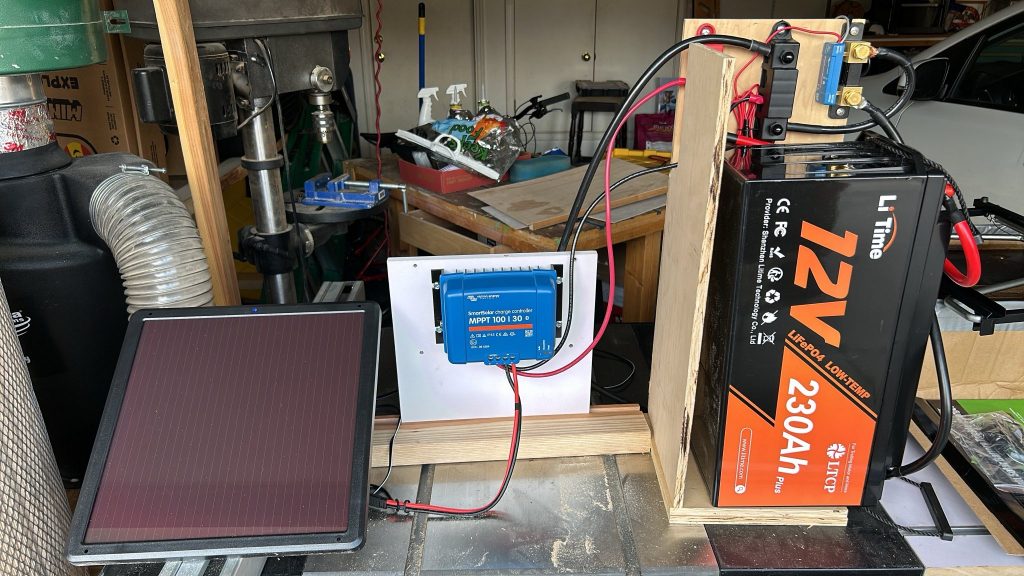
The build was extremely easy thanks to Victron Energy’s monolithic management concept. Dad decided to use the app to update the firmware on the devices and to configure battery related settings. He eventually discovered Venus OS (the same os running on the GX’s) on a Raspberry Pi 2w and he had one laying around. As usual, adopting the device was well polished. Once the Rasp Pi booted, it was discoverable by the app and after a bluetooth pair, a remote console and a vrm dashboard is available. For more information, Dad followed this.
Additional parts would need to be installed due to using a Raspberry Pi. A usb splitter to provide a usb-a port for each Victron device and the respective Victron VE.direct cables. A 5V buck converter will also be needed for power. VE.direct are plug n play and the devices just appeared on the remote console.
The programming, configurationtest results.
Retrofit requirements
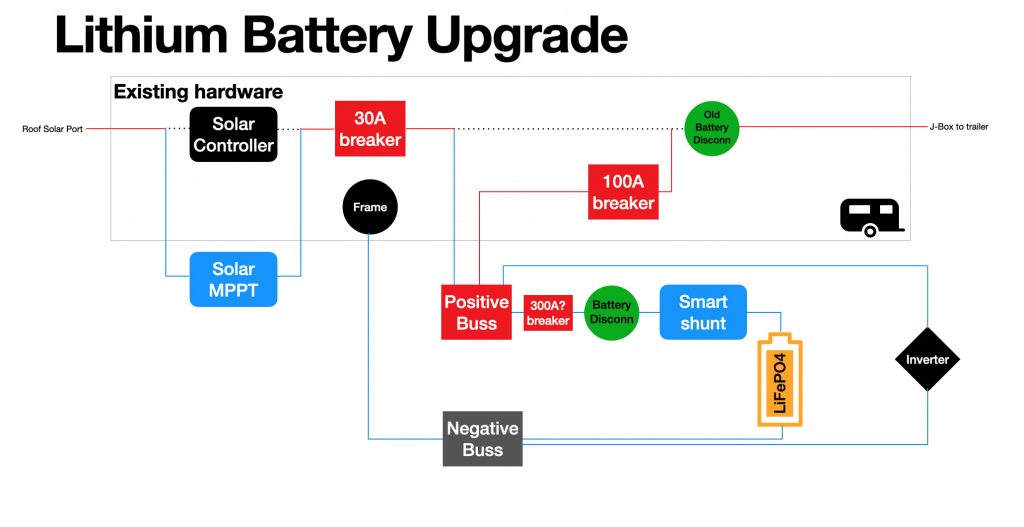
To simply state the retrofit, Dad is replacing the solar PWM controller with a solar MPPT controller and the Lead Acid batteries with a Lithium battery. However, due to the price of the battery, Dad wants to build it in unused space in the trailer to keep it out of sight. The two new monitoring devices also needs to be close enough for the Ve.direct cable to reach.
The project continues…